• Link to Facebook Link to Facebook Link to Facebook
  • Link to Instagram Link to Instagram Link to Instagram
  • Link to LinkedIn Link to LinkedIn Link to LinkedIn
  • Link to X Link to X Link to X
Call 1-844-202-2169
Mainland Machinery
  • Services
    • Engineered Solutions
    • Custom Fabrication
    • Field Services
  • Sectors
  • Projects
  • About Us
    • Letter From the President
    • Mission & Vision
      • Community Involvement
    • Our Team
    • Employment
      • Current Career Opportunities
  • Partners
    • GSI
    • WAM
  • Blog
  • Contact Us
  • Menu Menu
Mainland Machinery Ltd

Utilizing Drones in Oil and Gas Industry

December 17, 2014/in International, Oil & Gas, Technology/by Mainland Machinery Ltd

drones in oil and gasUtilizing Drones in Oil and Gas Industry

Drones in the oil industry? They have made their way into mail delivery and hurricane hunting, so it seems natural that there would be a place for drones in the oil and gas industry. In fact, a number of big names in the industry have already jumped on board, launching aerial tests in remote parts of North America.

These unmanned aerial machines made their first real appearances in the industry in 2013, with new experiments and tests shifting the way we understand extraction technology. Smaller than conventional tools like helicopters, drones can reach areas that have historically troubled mapping efforts. And since no humans actually have to be along for the ride, drones can achieve mapping and monitoring at a fraction of the cost of human employees.

Worldwide, new applications are emerging. Recently, geologists in Norway demonstrated that they could use drones, equipped with laser scanners, infrared sensors, and digital cameras to model an area’s minerals and rocks, making it much easier to find oil. As we move closer to having drones approved for use in conventional airspaces the pursuit to use this technology in the oil and gas industry isn’t so far off.

The First Oil Company Drone

ConocoPhillips is using the Boeing ScanEagle drone in trials in the Chukchi Sea near Point Barrow, Alaska. The company began trial flights on September 25, 2013, marking the first-ever commercial drone flight in American airspace.

Its maiden voyage took 36 minutes, just enough time to test its sensors and navigation systems for the approval of American regulators. Since then, several other companies have been approved for tests, mostly in Alaska and Arctic regions.

Terrain Mapping

Using drones to complete land surveys is more affordable than manned efforts, making the process quick and efficient. The Norwegian team of researchers mentioned previously use their drones to generate 3D terrain maps that can be integrated with geological and seismological data to produce images of the interior of the Earth’s crust.

All of this data allows experts to predict the likelihood of finding oil both on land and underneath the seabed, at a fraction of the cost of manned helicopters and other conventional techniques.

Monitoring Oil Fields and Pipelines

In June, BP became the first American company approved to use drones to survey its properties. Their drones come from AeroEnvironment Inc, the same company that provides 80% of the Pentagon’s drone fleet.

Their Puma drone, a hand-launched craft about 4.5 feet long and 9 feet wide, will perform flyovers of their Prudhoe Bay oil field to monitor maintenance activities on roads, oil pipelines, and infrastructure. The tool can also aggregate data to create three- dimensional models of roads, pipelines, and topography. And, like other drones, the Puma’s tiny size means that it will be able to reach and map areas out of the range of conventional techniques.

Oil Spill Detection

Thermal infrared and multi-spectral imaging capabilities enable the unmanned aircraft to detect leaks that would otherwise not be visible. Not only will this help crews respond rapidly to potential problems and provide additional information to first responders, but it will also help make decision-making simpler and more straightforward.

It is even possible that as technology develops, drones using advanced imaging techniques could detect toxic particles in the air from defective pipelines, taking safety to a whole new level.

/wp-content/uploads/2021/07/forweba-300x99.png 0 0 Mainland Machinery Ltd /wp-content/uploads/2021/07/forweba-300x99.png Mainland Machinery Ltd2014-12-17 09:16:142014-12-17 09:16:14Utilizing Drones in Oil and Gas Industry
Mainland Machinery Ltd

OPEC: Is the Power of the Oil Cartel Waning?
December 10, 2014/in Oil & Gas/by Mainland Machinery Ltd

OPECIs the Power of the Oil Cartel Waning?

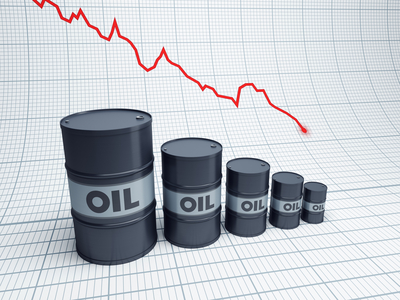
Since the 1960’s, the Organization of Petroleum Exporting Countries (OPEC) has cast a powerful shadow over the international oil trade. Finally, it looks like their power is waning. For the last seven years, OPEC managed to keep oil prices high, at least 100 dollars (USD) per barrel. Today, falling oil prices threaten the very existence of the cartel.

The same high prices that kept citizens of OPEC countries happy, has slowly dried up demand for such costly oil, and inspired North American companies to explore new techniques, particularly the investment in oil sands extraction and fracking. As these non-OPEC sources for fossil fuels have gained ground, their market share has grown and prices have finally started to drop. Now, with barrels of oil sitting at a mere 70 dollars (USD) per barrel, the once-powerful OPEC is struggling to maintain control of their supply.

Crumbling Prices

Presently, OPEC countries are struggling to find a direction forward. Saudi Arabia, currently the world’s largest oil producer, and a leading member of OPEC, wants to see decreased oil prices to maintain OPEC’s large market share. Poorer countries, like Iran and Venezuela, would rather see higher prices.

At the end of November, OPEC announced that they would not cut oil production from their current 30 million barrels a day, a move which some analysts believe could see oil prices tumble to as low as 60 dollars (USD) per barrel. In fact, immediately following the news, Brent crude hit a four-year-low price, and West Texas Intermediate dipped below 70 dollars (USD) a barrel.

Disagreement Between OPEC Members

These are exactly the results Saudi Arabian leaders were looking for, with hopes that non-OPEC production will be significantly arrested, so that prices can recover naturally, while OPEC retains its current market share.

However, OPEC’s mission statement is to protect the interests of members both individually and collectively, and by willfully promoting market price drops, Saudi Arabian and Gulf leadership are driving a stake between themselves and other member nations, who will undoubtedly feel the pain of the dropping prices. Those states could very likely ignore OPEC’s stated production limits in order to protect their own budgets.

The End of An Era

It is a widely held belief that OPEC is losing its power over the market. Indeed, researchers have been looking into this very question. In 2013, Jeff Colgan published a paper that found very minimal OPEC influence on oil production. Now that’s a strong claim, but Colgan is careful to specify that while OPEC’s power is limited at best, powerful member countries, like Saudi Arabia, do have power over the international markets. So we might be seeing an end to the cartel’s power, but not the end of Middle Eastern power.

Other observers, like the Telegraph’s Jeremy Warren, see OPEC’s already shrunken market share (once a high of 50%, the cartel controls just 30% of the oil market today) as a sign of its weakness, and softening prices as the sign of its imminent demise. Infighting on oil prices may further point to a lack of control.

Many observers hypothesize that this is the end of OPEC’s control of the market through supply. Regardless, the next few years will see a dynamic shift in the oil industry as many countries vie for having the upper hand in controlling oil prices.


/wp-content/uploads/2021/07/forweba-300x99.png 0 0 Mainland Machinery Ltd /wp-content/uploads/2021/07/forweba-300x99.png Mainland Machinery Ltd2014-12-10 14:45:252015-04-02 11:16:34OPEC: Is the Power of the Oil Cartel Waning?
Mainland Machinery Ltd

Canadian Petroleum Engineering Schools

November 27, 2014/in Canada, Oil & Gas, Training/by Mainland Machinery Ltd

canadian petroleum engineering schoolsCanadian Petroleum Engineering Schools: Reputable Petroleum Engineering Schools in Canada to Consider

Planning to launch your career in oil and gas? The first step to becoming a desirable employee is getting a great education under your belt, which will prepare you for the challenges of working in the oilfield. The industry is in particular need of engineers from all disciplines, especially petroleum engineers. In fact, the Petroleum Human Resources Council of Canada estimates the oil and gas industry will need roughly another 1,100 petroleum engineers by 2015.

One incentive for pursuing this career path is the high wages petroleum engineers earn. The average income is $141,000 Canadian, with a top end around $282,000. In fact, petroleum engineering is considered the highest paying engineering jobs in the world according to mycanadianuniversity.com.

To provide background on what petroleum engineers do, they’re the people on the oil and gas team who assess costs and viability of drilling projects, and design the methods for extracting oil. The education required for this career is intensive, and not all schools offer petroleum engineering programs. Instead, many working petroleum engineers have backgrounds in chemical or mechanical engineering. That means that you can put yourself ahead of the pack by getting the best specialized education.

University of Alberta

This university in the heart of the Canadian prairies offers a BSc in petroleum engineering, and it is the only school in Canada with international accreditation and recognition. It also offers an Msc, MEng, and PhD in petroleum engineering, giving students access to long-term education in its well-funded facilities.

Memorial University

The Memorial MSc is in Oil and Gas Engineering, meaning it covers both oil and natural gas engineering. There’s also an opportunity to work in an internship as part of the program. The school also offers programs in Process Engineering — which focuses on modifying materials like oil for use in products — and Environmental Systems Engineering and Management — which covers remediation, environmental law, and arctic offshore drilling.

Dalhousie University

There are two options here: A MEng in Petroleum engineering, or an MEng or PhD in Mineral Resource Engineering with a focus on petroleum. Both programs offer research opportunities for students, with the rare opportunity to study cutting-edge challenges like offshore drilling, ocean fluids, and reservoir engineering.

University of Regina

The University of Regina’s program is connected to the Petroleum Technology Research Centre, a facility used for research into all areas of petroleum production, from oil recovery to carbon storage. Its mandate is to improve petroleum recovery rates while reducing the environmental footprint of the industry. The connection gives BSc, MEng, MSc and PhD students a high level of hands-on training.

University of Calgary

The BSc in Oil and Gas Engineering at the University of Calgary covers geological principles, thermodynamics, and mass conservation alongside practical courses on oil field safety, well testing, and drilling. Set in the heartland of oil production, the potential professional links here are excellent.

Northern College of the Atlantic

Northern College of the Atlantic offers a three-year program, with a minimum of 12 weeks work experience. This combination builds an excellent base of technical knowledge and builds it up with a strong foundation in real-world lessons.

/wp-content/uploads/2021/07/forweba-300x99.png 0 0 Mainland Machinery Ltd /wp-content/uploads/2021/07/forweba-300x99.png Mainland Machinery Ltd2014-11-27 11:10:562014-11-27 11:10:56Canadian Petroleum Engineering Schools
Mainland Machinery Ltd

New Partnership with Olympian Georgia Simmerling!

November 24, 2014/1 Comment/in Company Update, Georgia Simmerling, In the Community/by Mainland Machinery Ltd

Georgia Simmerling. Vancouverite. Ambassador for ‘Right to Play’ and ‘Fast & Female’. World Cup Silver Medalist in Ski Cross.

 Two-time Olympian.

Georgia Simmerling Official Olympic Image

Representing Canada in Alpine Skiing at the Vancouver 2010 Olympic Winter Games, Georgia made the decision to move over to the exciting world of Ski Cross. Qualifying for the Olympic team in her new sport, she recently competed in the 2014 Sochi Games.

Georgia had skis on her feet since she was a young girl, growing up racing alongside her family at Grouse Mountain. After years of hard work, determination and perseverance, she started her Olympic journey and made her way up the ranks to represent Canada in Alpine Skiing in 2010.

Her unwavering mindset saw her to the 2014 Olympics for Ski Cross, and has put her in the running for the 2018 Pyeongchang Winter Olympic Games. After a great start in Ski Cross, Georgia has quickly established herself as a medal contender.

With an exciting road full of opportunities before her, Georgia Simmerling is one to watch!

The path to one’s success is often paved with support from others, and it’s no different for athletes. Along Georgia’s journey she has sought to connect with various people, businesses and organizations; bringing encouragement and forging partnerships.

                   Passion. Drive. Integrity. Determination. Commitment. Innovation.                          

All are echoed here at Mainland and in our daily lives as we strive to be our best selves and be the best company that we can. In that spirit:

We are excited to announce that Mainland is proudly sponsoring Georgia in her Olympic endeavor!

Georgia Simmerling Paul Hiebert

At Mainland, we value supporting local athletes within our community. We appreciate the amount of work that goes into training; the work that goes into being the best that one can be.

Sponsoring Georgia is a great way for us to be further involved in the community, to build brand awareness as we collaborate with her, and to help people know what we here at Mainland are all about.

So we invite you to come along on this journey with us! Over the next few months, as our relationship develops, we will be sharing more updates and information on our partnership. Keep an eye out for emails, blogs, and social media posts. Share in the excitement with us, and show your support!

If you want to know more about Georgia, visit her website http://www.georgiasimmerling.ca

/wp-content/uploads/2021/07/forweba-300x99.png 0 0 Mainland Machinery Ltd /wp-content/uploads/2021/07/forweba-300x99.png Mainland Machinery Ltd2014-11-24 14:07:182014-11-24 14:09:23New Partnership with Olympian Georgia Simmerling!
Mainland Machinery Ltd

Ramada’s Toys for Tots Christmas Breakfast

November 20, 2014/in Company Update/by Mainland Machinery Ltd

Mainland is excited to be helping sponsor this years Ramada’s Toys for Tots Christmas Breakfast!

The breakfast is taking place next Friday, November 28th from 6-9:30 am at The Ramada Plaza & Conference Center Ballroom. The event provides a fun and Christmas filled opportunity to give back and provide for children in our community. All proceeds benefit the Abbotsford Food Bank & Christmas Bureau.

At Mainland Machinery we value our community and recognize the importance of both being active in it, and giving back to it.

In the past our staff has come together to partner with the Abbotsford Food Bank’s Christmas Bureau to provide gifts and Christmas meals. We want to give back, and we believe in and support the work that the Abbotsford Food Bank is doing helping others in our community. We want every child to have a gift to open at Christmas, to share in the excitement, to know they are cared for.

Helping support this year’s Toys for Tots Christmas Breakfast was a perfect way for us to get involved further, and to help spread the word of both the needs in the community, and the good work being done.

Ramada's Toys for Tots Christmas BreakfastAttendees are asked to bring a toy (ranging from children’s toys to gifts for teenagers) or financial donation and are then invited to stay for a complimentary buffet breakfast or trip through the coffee drive through being put on by Tim Hortons. 

So if you are looking to enjoy some live entertainment, including star FM and Country 107 broadcasting live on location, visits with Santa, Christmas music and a Photobooth put on by Cheddarbooth, come down on the 28th and get into the Christmas spirit!

We hope to see you there!

/wp-content/uploads/2021/07/forweba-300x99.png 0 0 Mainland Machinery Ltd /wp-content/uploads/2021/07/forweba-300x99.png Mainland Machinery Ltd2014-11-20 10:41:332014-11-20 13:36:21Ramada’s Toys for Tots Christmas Breakfast
Mainland Machinery Ltd

The New Wave of Energy Crowdfunding

November 18, 2014/in Business Development, Financial, Oil & Gas/by Mainland Machinery Ltd

energy crowdfundingThe New Wave of Energy Crowdfunding

Crowdfunding projects seem to know no bounds. With platforms like Kickstarter, IndieGoGo and RocketHub springing up all over the Internet, the power of the group has taken many movies, games, toys, and even bioluminescent plants into solid reality.

Now, oil and gas startups are getting into the mix, with hopes of shaking up “the big six”.

For new entrepreneurs lacking deep pockets, crowd funding offers the opportunity to compete with existing oil and gas companies. Plus, since they’re starting from scratch, there’s nothing to stop them from exploring alternative energy sources and making them financially viable.

The market is there, and is already powerful. Crowdfunders raised $2.7 billion worldwide in 2012 for more than a million individual projects.

Governments are also eager for the success of crowd funding. The United Kingdom government, for example, has hopes of attracting 75 billion pounds in low-carbon fuel sources by 2020. Crowdfunders could cover up to 50% of that goal.

In Germany, citizen-owned renewables, in particular wind farms, already make up a significant market share. With 25% of their energy coming from renewables and nearly half of those sources owned by the public, German citizens invested 137 billion in renewables over the last 8 years.

Stateside, the country’s largest solar power provider predicts heavy crowd funding involvement in rooftop solar panelling, with a projected $5 billion investment in the next five years.

Oil and gas companies have good reason to get into the mix as well. New companies can diversify their interests more easily using crowd funding, and by bringing the public into investing, companies add a new level of transparency to their business. Trust built by transparency would benefit reputable operators and their businesses.

New companies aren’t the only potential beneficiaries either as big oil and gas companies could modify existing contracts to accommodate crowd funding. Either way, investors win. By providing a low-cost buy in with potentially high returns, new drilling efforts offer investors the chance to diversity and protect themselves from losses, just as any oil and gas company might.

Small Players, Big Goals

The new crowdfunding energy market has several small players, all hoping to shake up energy as we know it. Here are a few of the start-ups trying their hands at crowd funding:

  • EnergyFunders.com – EnergyFunders is a site devoted to raising money exclusively for energy projects. They allow investors to browse through projects, and offer a documented investment process.
  • Symbid – Symbid is a Dutch firm that offers crowdfunding for junior mining companies and oil and gas exploration companies where the traditional investment banks won’t go. They are offering direct equity funding which is normally not allowed for smaller investors within North America.
  • EAFunds – Energy Access Funds is a startup firm that has created an online marketplace for the oil and gas industry in the US and Canada. As investments into the energy sectors are mostly limited to pension funds or even endowments, EAFunds allows individuals to be able to invest in oil and gas industry opportunities.
  • Crudefunders.com – Crudefunders was created to allow any size investors to invest in new explorations and drillings. They are more active in only including opportunities that meet their minimum criteria for investment.
/wp-content/uploads/2021/07/forweba-300x99.png 0 0 Mainland Machinery Ltd /wp-content/uploads/2021/07/forweba-300x99.png Mainland Machinery Ltd2014-11-18 14:25:302014-11-18 14:29:55The New Wave of Energy Crowdfunding
Mainland Machinery Ltd

Canadian Producers Sheltered from Oil’s Plunge

November 12, 2014/in Canada, Oil & Gas/by Mainland Machinery Ltd

“Canadian producers sheltered from oil’s plunge“

We came across this interesting statement in an article in The Globe and Mail, written by Shawn McCarthy and Jeff Lewis.

The article states

“Canadian crude producers are being cushioned from falling global prices by a drop in the loonie and narrower discounts for heavy oil shipped to key U.S. markets.

Brent crude, the global benchmark, has fallen about 15 per cent over the past 30 days, and U.S. West Texas intermediate has also tumbled sharply. But in Canada, the average price in Canadian dollars received by producers was actually slightly higher in the past month than over the previous 4 1/2 years, Toronto-Dominion Bank economist Leslie Preston said in a report Monday.

The reason is tied to favourable moves in the currency market, along with a reduced discount for Canadian heavy oil against WTI as more Alberta oil finds its way to U.S. refineries in need of heavy crude.”

Click here to read the article in it’s entirety.

/wp-content/uploads/2021/07/forweba-300x99.png 0 0 Mainland Machinery Ltd /wp-content/uploads/2021/07/forweba-300x99.png Mainland Machinery Ltd2014-11-12 10:46:402014-11-12 10:47:57Canadian Producers Sheltered from Oil’s Plunge
Mainland Machinery Ltd

The Future of Canadian LNG

November 6, 2014/in Canada, Government, Oil & Gas/by Mainland Machinery Ltd

future of canadian lngThe Future of Canadian LNG (Liquefied Natural Gas)

Canada isn’t fully capitalizing on the global LNG market due to speculation and storage – but with global LNG demand growing, how soon should Canada bolster its LNG production and market strategy?

Indexing the Concern

A survey conducted by Alberta Oil Magazine offers a look into the current state of liquid natural gas (LNG) in Canada, particularly in British Columbia, where over twelve LNG megaprojects of historic proportions have been proposed.

Unfortunately, final investment decisions have yet to be made due to price variances because of unfortunate seasonal influence and hoarding.

With regards to investor sentiment, the survey found that:

  1. Investors are concerned with the possibility of over-supplying the market to the point it would make the industry significantly less profitable.
  2. Increasing domestic industry demand will not have a negative effect on the economic viability of the BC projects.
  3. Investors would like to see more government support to introduce training measures that address the small labor pool that the LNG industry will be facing.
  4. Investors would support the idea of using foreign workers to fill the labor gap.
  5. Investors are concerned with the prospect of Japan’s current dependence on natural gas slipping due to the reinitializing of their nuclear power plants, which were shut down since 2011 after the Fukushima disaster.
  6. Investors are on the fence about how much of an effect changing the price index will have on the industry.
  7. Investors feel that the B.C government isn’t doing enough to promote the industry, finding the two-tier tax policy uncompetitive compared to policies in the US and Australia.
  8. If the industry would further pursue floating LNG facilities, with their reduced capital and operating costs, LNG projects would be viable and competitive.

The Answer to Cold Feet: Export, Export, Export

While some LNG productions are being switched over to oil production because of LNG’s low price point, other LNG producers such as Quicksilver Resources and Liquefied Natural Gas Ltd have asked for federal permission to export 20 million tonnes of LNG per year over 25 years. This is a constructive attempt to diversify the markets beyond North America and benefit from higher prices in the Pacific markets. This is in part the reason there is such high interest in developing over a dozen LNG projects along the B.C. coast.

If these projects can gain ground and funding, this can help bring consistency and competitiveness back into the North American LNG market where in turn a wider application and use of natural gas in public and private transportation can help contribute to ongoing efforts to reduce carbon emissions and pollutants, as well as progress the embedding of sustainable and renewable fuel.

In addition to pursuing exportation as an option, it is important for LNG companies to address the investor concerns uncovered through the Alberta Oil Magazine survey. If industry leaders would work to gain greater government support and would consider alternative practices such as foreign workers and floating LNG facilities they may see investor interest increasing and their proposed megaprojects may become a reality.

/wp-content/uploads/2021/07/forweba-300x99.png 0 0 Mainland Machinery Ltd /wp-content/uploads/2021/07/forweba-300x99.png Mainland Machinery Ltd2014-11-06 11:01:032014-11-06 11:01:03The Future of Canadian LNG
Mainland Machinery Ltd

Is There a Glass Ceiling in the Oil and Gas Industry?

October 30, 2014/in Business Development, Canada, Oil & Gas/by Mainland Machinery Ltd

Glass Ceiling in the Oil and Gas IndustryIs There a Glass Ceiling in the Oil and Gas Industry for Women?

Canada has been known to promote gender equality in both the business world and in society. However, a report published by Oxfam indicates otherwise. It has been found that progress for women in the Canadian economy has stalled and, in many cases, moved backwards. The existence of a glass ceiling for women is an unspoken truth in the business world.

This gender inequality is even more evident in the oil and gas industry. A study in 2011 indicated that nearly one third of publicly traded energy companies had no women in executive positions or as members of the board. As much as efforts have been made to break the theoretical ceiling, the energy industry seems to be missing the mark.

The lack of equality advancement in the oil and gas sector could exist for many reasons, including current industry executives being from a previous generation and a general lack of female interest in the industry.

Fortunately, there are a few notable successes in the advancement of women working in the energy sector. For example, the Canadian Association of Petroleum Producers (CAPP) finally had their first Chairwoman, Kathy Sendall, after 15 years of exclusively male leaders. And in May of 2007, Bonnie Dupont, became the first woman to be the president of the Calgary Petroleum Club.

Cracking the glass

In a recent PWC study of women in board positions in the field, it was found that businesses with women on the board and in senior management positions generally have better financial performance and higher profitability.

Despite this, a survey of the 100 largest gas and oil companies saw only 11% of board seats held by women. This ratio is second only to the mining industry in terms of male domination. The average board surveyed held 11 seats, including two executive seats. Of these, 13% were women in non-executive seats and barely 1% in executive positions. Of the women who do hold seats in management, very few have a chance at the board director seat – suggesting the presence of a ceiling even in the highest levels of business.

In order to change attitudes and open doors for women, industry insiders have started to change attitudes early. They have started by working with universities since 2010 in increasing the recruitment of female engineering students. The Schulich School of Engineering has had success with their website – Cybermentor.ca, created to pair female professional engineers with prospective female students to promote an increase in participation in the engineering field. Their goal is to foster corporate leadership, community involvement, and most importantly, to encourage women who are considering pursuing related careers.

Personal Deterrents

One possibility of better upward movement for women is to include additional technical subjects throughout their studies so that they are better equipped to move directly into the oil and gas field upon graduation.

Additionally, companies should seek to keep employees happy, as many are beginning to opt ‘out’ of their field instead of ‘up’ within the business. Better support for women, through mentorship and communication, during their time in the leadership pipeline can also prepare them for upper management roles and to support their pursuit of upward movement. Retention of employees through this support is a key factor in keeping qualified women in the field.

/wp-content/uploads/2021/07/forweba-300x99.png 0 0 Mainland Machinery Ltd /wp-content/uploads/2021/07/forweba-300x99.png Mainland Machinery Ltd2014-10-30 10:44:462014-10-30 10:55:56Is There a Glass Ceiling in the Oil and Gas Industry?
Mainland Machinery Ltd

Take This Job & Love It! Retaining Oil and Gas Millennials

October 28, 2014/in Business Development, Oil & Gas, Tips & Tricks, Training/by Mainland Machinery Ltd

retaining oil and gas millennials

Take This Job & Love It! Retaining Oil and Gas Millennials

There is no doubt about it – in order for the oil and gas industry to meet the growing demand for energy, they need to formulate effective strategies to attract and engage the industry’s newest resource: Generation Y or Millennials (born between 1980 to early 2000). You may well ask why.  If you’ve been working in upstream oil and gas for over 20 years, chances are you will be looking to retire in the not-too-distant future. This is exactly what corporate leaders in the oil and gas sector have been concerned about for the past decade or so – the pool of talent with all the requisite skills is diminishing, due in most cases to natural attrition and in some cases from incentives to jump ship to other employers.

Although many jobs in the oil and gas sector are highly technical and require skills and experience that are unable to be filled by ordinary means, the industry is looking to replenish their dwindling talent pool by attracting millennials.  Oil and gas employees are responsible for making big decisions that have huge financial consequences — one wrong decision might cost a company millions in a single day. For this reason, upstream oil and gas must ensure that the millennials who are potential employees are engaged, sufficiently trained and able to make autonomous decisions.

How did we get here?    

The current lack of sufficient employees in the oil and gas sector wasn’t helped by the industry’s hibernation for most of the 1980s and 1990s. During those two decades hiring in the industry ground to a halt, and as a natural result universities and colleges dropped petroleum programs from their calendars. Fast-forward 30 years and the demand for energy is at an all-time high.  Universities and colleges have appropriately shifted gears and are producing new graduates that are recruited on-campus.  Oil and gas industry CEOs are acutely aware of the evaporating pool of talent with specialized skills that keep their respective organizations competitive.  There’s only one problem – new hires lack the experience that will ensure they make sound decisions. Employers are also concerned that once a new employee has gained adequate experience they may be persuaded to take a job offer from one of their competitors.

Retention Strategies

As with most recruitment campaigns, a good strategy begins with capturing the hearts and minds of the people you wish to attract.  How is this done with millennials? For one thing, employers need a change of organizational mindset to embrace the notion that millennials are looking to complement their lifestyle with their job instead of the other way around.  For example, if you’re looking to populate work camps for an extended period, the millennials’ quality of life is paramount.

Work/Life Integration

What do millennials want?  In studies such as the PwC 14th Annual CEO Survey, the findings show that millennials value work/life integration more than the conventional balancing act of job and the rest of your time. This is what a laundry list of millennial requirements might look like:

  • Premium accommodations at Work Camp sites instead of requiring workers to find local hotels, motels and trailer parks;
  • Emphasis on healthy eating by providing in-house nutrition specialists and premium dining facilities;
  • Adequate sleep by bringing in experts to facilitate a good night’s sleep for the high-risk jobs of rig workers;
  • Exercise facilities and Wi-Fi hotspots;
  • Encouraging open social networks without the need to monitor usage;
  • Mentorship programs that bring millennials and leaders together.

Next Steps

All of these steps sound expensive to implement, but when you consider that the cost of replacing an experienced professional or technical resource is approximately one-and-one-half times their annual salary, the issue takes on a much clearer perspective.  Remember that the specific skills required in the oil and gas industry don’t allow for seamless transferring-in from other industry sectors, no matter how similar.

In short, with the impending loss of institutional knowledge there is an urgent need for companies in the upstream oil and gas industry to update their approach to recruiting, developing, deploying and connecting their people.

/wp-content/uploads/2021/07/forweba-300x99.png 0 0 Mainland Machinery Ltd /wp-content/uploads/2021/07/forweba-300x99.png Mainland Machinery Ltd2014-10-28 09:28:502014-10-28 11:10:49Take This Job & Love It! Retaining Oil and Gas Millennials
Page 6 of 16«‹45678›»

Categories

  • Agriculture (8)
  • Business Development (14)
  • Canada (24)
  • Charitable (2)
  • Company Update (17)
  • Environmental (5)
  • Equipment (9)
  • Financial (4)
  • Georgia Simmerling (1)
  • Government (10)
  • HSE (18)
  • In the Community (2)
  • Informative (4)
  • International (13)
  • Manufacturing (12)
  • Metal (8)
  • Mining (44)
  • Oil & Gas (49)
  • Ports & Terminals (26)
  • Profiles (1)
  • Services (2)
  • Technology (40)
  • Tips & Tricks (15)
  • Training (9)
  • Transportation (12)
  • Welding (4)
  • Wellness (7)

Contact

Office & Mailing Address:
#110 – 2125 Windsor Street
Abbotsford, B.C.
V2T 6L9

Shipping Address:
#110 – 2138 Carpenter Street
Abbotsford, B.C.
V2T 6B4

Phone: 604-854-4244
Fax: 604-850-1796


Book an Appointment

Newsletter Signup

Keep current with leading edge industry news and Mainland Machinery updates.

SIGN-UP TODAY

Projects

  • Mainland Machinery Announces Distributorship with WAM
  • HELICAL WORKS ANNOUNCES PARTNERSHIP WITH GSI,
  • Dry Flocculant Mixing and Feeding Design Considerations
Copyright © - Mainland Machinery. All Rights Reserved. | Site by Wiebe Industrial Services
  • Link to Facebook Link to Facebook Link to Facebook
  • Link to Instagram Link to Instagram Link to Instagram
  • Link to LinkedIn Link to LinkedIn Link to LinkedIn
  • Link to X Link to X Link to X
Scroll to top Scroll to top Scroll to top