• Link to Facebook Link to Facebook Link to Facebook
  • Link to Instagram Link to Instagram Link to Instagram
  • Link to LinkedIn Link to LinkedIn Link to LinkedIn
  • Link to X Link to X Link to X
Call 1-844-202-2169
Mainland Machinery
  • Services
    • Engineered Solutions
    • Custom Fabrication
    • Field Services
  • Sectors
  • Projects
  • About Us
    • Letter From the President
    • Mission & Vision
      • Community Involvement
    • Our Team
    • Employment
      • Current Career Opportunities
  • Partners
    • GSI
    • WAM
  • Blog
  • Contact Us
  • Menu Menu
Mainland Machinery Ltd

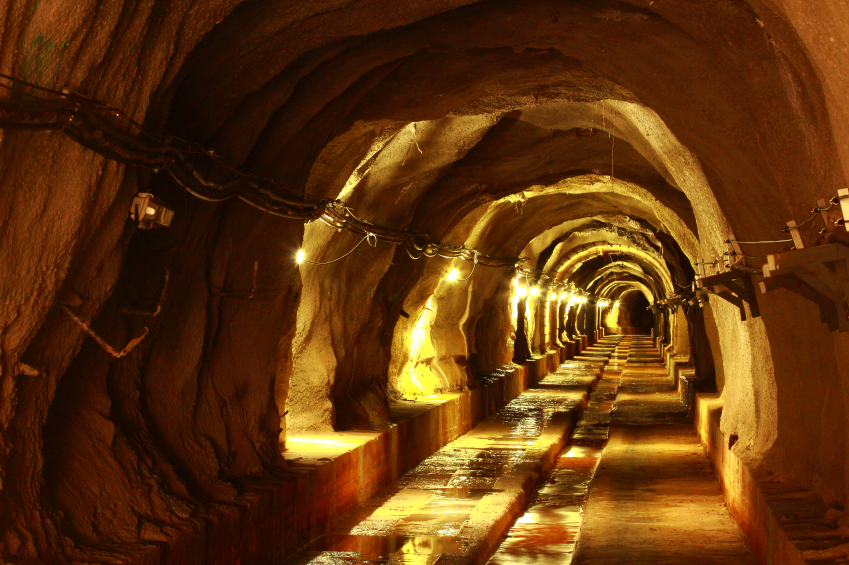
Business Risks That Threaten the Mining Industry

July 9, 2015/1 Comment/in Business Development, Mining/by Mainland Machinery Ltd

mining industryBusiness Risks That Threaten the Mining Industry

No industry is immune to business risks that threaten its members’ ability to continue operating efficiently and cost effectively, while remaining competitive within their market. It is no secret that the mining industry has been especially hard hit with challenges as it has sought to expand during the past decade. Increased regulation, economic instability, price volatility and political unrest throughout the world are just some of the factors behind the following business risks that are threatening the mining industry in 2015.

Risks that Have Remained Consistent for the Mining Industry

As participants in the mining industry sought opportunities for growth at any cost during the past decade, their overall productivity has significantly declined as a result. While some have tried to address this loss with cost-cutting measures, this has continued to increase losses due to productivity. The enormity of this problem calls for solutions that transform how companies are doing their business overall, including:

  • Increasing automation
  • Reassessing their mining methods
  • Updating and reconfiguring their equipment fleet
  • Changing their mine plans

As credit markets tighten, capital allocation and access remain a business risk to both major and junior entrants in the mining industry. While major producers are in the best position for continued growth because of their increased commitment to capital discipline, new or junior entrants to the industry often find their access to capital limited. This inability to raise equity will put many into survival mode or force them to leave the industry entirely. As a result, smaller companies may be forced to:

  • Seek to be acquired by larger companies
  • Consolidate with other small companies to pool their resources
  • Halt exploration, which limits potential business growth
  • Institute lay-offs and operate with minimal staff

Emerging Challenges to Watch for in the Mining Industry

The mining industry’s access to water and energy is essential for many of its operations and projects. Rising energy costs and unreliable power supplies are a growing threat. This threat further increases in countries where these resources are in limited supply, including those with emerging economies. This puts the industry at odds with governments and communities who are struggling to function with these limited resources, in addition to their environmental concerns. In order to deal with this risk, the industry needs to:

  • Become more sustainable by taking advantage of renewable energy sources
  • Switch to more resource-efficient operations that will lessen their environmental impact on communities
  • Develop solutions that will reduce their dependence on water

Of growing importance for those in the mining industry is to maintain their appeal to not just their shareholders, but also all stakeholders in general so that they can maintain a social license to operate (SLTO). Increased environmental awareness can threaten project acceptance by means of protests, violence and sabotage in communities that maintain a high SLTO. This can lead to blocking or significantly delaying projects if this license is lost. Therefore, it is important to ensure that the right controls are in place to promote stakeholder acceptance, including:

  • Acting responsibly by maintaining commitments and acknowledging the community’s concerns
  • Sharing an equitable amount of the benefits obtained from the project with the community
  • Addressing employee concerns concerning wages, safety, imported labor and job security

As with any industry, risks are always to be expected, as it is just the nature of doing business. However, the mining industry can benefit by taking a proactive stance against these risks that threaten its existence, instead of remaining in a consistently reactive state.

/wp-content/uploads/2021/07/forweba-300x99.png 0 0 Mainland Machinery Ltd /wp-content/uploads/2021/07/forweba-300x99.png Mainland Machinery Ltd2015-07-09 10:45:452015-07-09 10:31:45Business Risks That Threaten the Mining Industry
Mainland Machinery Ltd

Reclaiming Oil Sands

July 2, 2015/in Canada, Environmental, Mining, Oil & Gas, Technology/by Mainland Machinery Ltd

oil sand reclamationReclaiming Oil Sands

Canada’s oil sands have always been controversial. Despite their economic benefits, critics are concerned over the environmental damage the oil sands cause. Alberta’s oil sands are surrounded by pristine wilderness, and development has caused what is considered irreversible damage.

However, a number of Canadian companies are working to return the area to its natural state. With companies such as Syncrude pumping up to $60 million a year into researching land reclamation techniques, Canadian oil field companies are on the cutting edge of oil sands restoration efforts.

The Challenges of Land Reclamation

Alberta’s oil sands are located under an area covered by dense Boreal forest and wetlands. In order to extract the petroleum from the ground, large swaths of forest must be cleared to make way for open pit mines, or steam must be pumped into wells to separate bitumen from the soil. The waste water generated by these processes is stored in highly toxic “tailing ponds,” which account for about 25 per cent of the area disturbed by oil sands development. These ponds are one of the largest problems for environmentalists.

To be certified as reclaimed, any traces of man-made impact must be removed, and the land must be capable of generating native plant and animal life. This makes reclaiming wetlands complex, due to the diverse mix of life contained therein.

Can a Forest Be Rebuilt?

A number of companies operating in the oil sands region are doing their part to ensure that disturbed areas are restored to their native Boreal forest.

Collaboration between industry heavyweights such as Shell Canada, Suncor Energy, Nexen Energy and Husky Energy has resulted in 2.5 million trees and shrubs being planted. The project has replanted about 700 hectares of land disturbed by industrial development.

Replanting these areas rather than allowing them to regrow on their own ensures that the areas are not overtaken by invasive plant species and that animal habitats are not disrupted.

Cutting-edge Techniques

Completely restoring the wetlands disturbed by oil sands development is the greatest challenge of land reclamation. Syncrude’s Sandhill Fen research project, however, is making strides.

The purpose of the project is to create a sustainable wetland environment and share successful techniques with other companies and organizations. This has resulted in a 50 hectare, man-made pollution-free watershed built from tailing sands. Although no animals have been reintroduced to the area – as it is still part of an active mine site – some animals have begun to return on their own.

Other projects, such as Suncor Energy’s Nikatonee Fen, have achieved similar success.

Cleaning up Tailing Ponds

The removal of tailing ponds is another key priority in restoration efforts. The most important development in this aspect of cleanup has been Suncor’s centrifuge plant. The centrifuge returns the water from tailing ponds to its natural state by spinning it rapidly to remove the solid pollutants. The plant became operational in early 2015 and is expected to reduce tailing ponds by 50 per cent.

/wp-content/uploads/2021/07/forweba-300x99.png 0 0 Mainland Machinery Ltd /wp-content/uploads/2021/07/forweba-300x99.png Mainland Machinery Ltd2015-07-02 09:45:492015-07-02 09:28:26Reclaiming Oil Sands
Mainland Machinery Ltd

Sheet Metal Fabrication; Electroplating vs Painting?

June 24, 2015/8 Comments/in Manufacturing, Metal, Technology, Tips & Tricks/by Mainland Machinery Ltd

 Electroplating vs PaintingSheet Metal Fabrication; Electroplating vs Painting?

Choosing a finish is an essential step in the sheet metal fabrication process. Finishes can prolong the lifespan of metal parts, improve their cosmetic appearance and increase their suitability for their intended use. There are a number of options for finishing sheet metal parts, but two of the most common are electroplating and painting. Both of these options offer distinct advantages as well as certain drawbacks depending on the product’s purpose.

Electroplating vs Painting

Electroplating is the process of attaching a thin layer of one metal, such as chrome, iridize or zinc, to the surface of another base metal, such as aluminum. The plating is chemically bonded to the surface of the base metal through electric conduction. Electroplating should not be confused with anodizing, which involves bonding an additional layer of the same metal to the base product through the same electrochemical process.

Painting is more straightforward and most people are familiar with it. A primer is first applied to the base metal, followed by multiple layers of liquid paint and finally, a protective coating such as lacquer is added to protect the underlying paint.

Advantages and Drawbacks of Electroplating

Electroplating offers a much stronger finish than paint. Depending on the choice of metal used for electroplating, the object may have better resistance to chemical corrosion or increased physical durability. For example, zinc offers additional resistance to water damage, while chrome reduces the friction on the metal’s surface and tin can be used to join aluminum, which is commonly used in sheet metal manufacturing, to dissimilar materials. Certain finishing metals can also increase paint adhesion to metal parts as well.

Because electroplating chemically bonds the finish to the metal product itself, the coating expands and contracts at the same rate of the base metal itself, making it suitable for environments with drastic temperature fluctuations.

However, electroplating can be expensive and uneconomical, especially when parts are small. Furthermore, the advantages offered by electroplating may be excessive if the metal product is intended for a use that does not take full advantage of the benefits offered by the process.

Advantages and Drawbacks of Painting Sheet Metal

The most obvious advantage of painting is that fabricators have a much greater degree of control over how the finished product will look. Paint comes in just about any color imaginable, meaning that there are endless options for how the final product will look. Furthermore, company and product logos can also be added to the surface to further increase its cosmetic value.

Certain paints offer similar advantages to electroplating; some can increase the metal product’s resistance to chemical corrosion or physical damage, though not to the same degree as electroplating. Damage to specific areas of painted surfaces is easily repaired as paint can be applied quickly and easily to small areas of a product’s surface. Another advantage paint has over electroplating is that it can be applied to certain areas of a product’s surface if the entire product does not require finishing. Unlike electroplating, painting is not an “all or nothing” process.

Paint, however, is not as durable as electroplating. Furthermore, because paint is applied as liquid, it can take many applications to ensure a finish of even thickness and color.

Which Option is Best For You?

Electroplating and painting each offer unique advantages for finishing a sheet metal product. Ultimately, deciding on which finishing option is best for you depends on the intended use of your product. It is important that you consider all factors and the advantages and drawbacks of each before making a final decision.

/wp-content/uploads/2021/07/forweba-300x99.png 0 0 Mainland Machinery Ltd /wp-content/uploads/2021/07/forweba-300x99.png Mainland Machinery Ltd2015-06-24 10:15:482015-06-08 14:39:28Sheet Metal Fabrication; Electroplating vs Painting?
Mainland Machinery Ltd

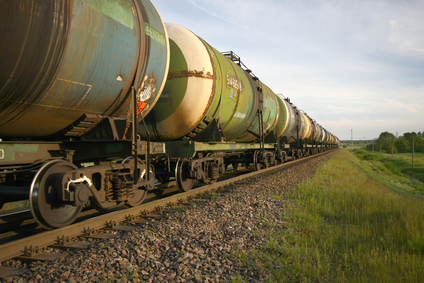
Oil Storage and Transportation: Minimizing The Risks

June 17, 2015/1 Comment/in Canada, Oil & Gas, Transportation/by Mainland Machinery Ltd

oil transportation and storageOil Storage and Transportation: Minimizing The Risks

Crude oil can be dangerous and capable of doing a great deal of damage in a short amount of time. Preventing serious accidents and hazardous situations should always be a priority. Good design, regular maintenance, and proper training all come together to create safe, reliable transportation and industrial storage solutions.

Safer by Design

In designing industrial storage solutions, you are well served by remembering the basics. In order to burn, fire requires three things: heat, a combustible material, and oxygen. Oxygen is readily available in the air, and the oil itself, along with the fumes it gives off, is a combustible material. This combination makes pumping stations a prime candidate for an incident.

Pumping stations should be kept as cool as possible and pumping should only occur when truck engines are turned off. Smoking and anything that involves combustion must be prohibited from the area. Pumping stations must also be well ventilated so escaping gasses do not have a chance to build up.

Storage tanks must be properly grounded to avoid any electrical sparks, and they should be equipped with gas detection systems so operators can be alerted to dangerous situations. It should go without saying that all storage units should be built according to code.

Maintaining Safe Conditions

Degradation of storage and pumping units can lead to dangerous conditions and preventable incidents. Therefore, storage facilities require a stringent routine of inspection and maintenance. Trained inspectors should check for gas leaks on a daily basis, and all workers must be required to wear rubber-soled shoes. Smoking, cell phones, and anything else that could cause a spark must be prohibited from the area.

Maintenance tasks should never be completed with battery operated tools, as they are more likely to spark than hard-wired tools. In addition, all tools and extension cords should be in good repair as both are potential sources of sparks that could result in fire.

Training for Prevention

Industrial storage solutions are inherently dangerous. There is no safety procedure or any piece of safety equipment that is going to be effective without proper training. The education begins with the storage facilities:

  • Operation supervisors must know the purpose of each storage unit, and must use each tool and device correctly.
  • Inspectors must perform thorough inspections rather than simply report gas accumulation figures.
  • Inspectors should understand the proper use of each storage tank, where it can fail, what the first signs of failure are, and how to stop any degradation before it reaches the point of failure.

Training should be an ongoing activity, not a one-time event. Safety procedures should be reviewed with all employees on a regular basis, and all training materials should be frequently updated. Emergency procedures should be practiced and memorized by all workers so there is never any confusion or delay when incidents do occur.

/wp-content/uploads/2021/07/forweba-300x99.png 0 0 Mainland Machinery Ltd /wp-content/uploads/2021/07/forweba-300x99.png Mainland Machinery Ltd2015-06-17 10:15:142015-06-08 14:39:47Oil Storage and Transportation: Minimizing The Risks
Mainland Machinery Ltd

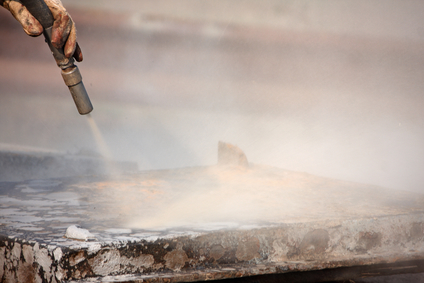
Sandblasting Helps Save Time and Money

June 10, 2015/1 Comment/in Manufacturing, Metal, Tips & Tricks/by Mainland Machinery Ltd

sandblastingSandblasting Helps Save Time and Money

A major challenge facing many industrial companies is how to get more use out of their storage tanks. Often companies simply purchase new tanks without trying to repair or restore their existing tanks. However, what many companies may not realize is that sandblasting provides an easy way to repair and restore their tanks to almost new condition. Sandblasting is a time and cost-effective method for maintaining and restoring existing tanks.

What is Sandblasting?

Sandblasting is the process of shooting a gritty, particle-based medium such as sand, glass beads or aluminum sulfide onto a hard surface to sand or polish it smooth. There is a variety of purposes where sandblasting can be useful. It can be used to clean pollutants or remove rust from storage tank walls or to prepare them for repainting or recoating.

Sandblasting is an extremely versatile process because of the many types of mediums that can be used. For example, a more delicate tank lining may require a gentler sandblasting medium such as walnut shells or glass beads. Tougher jobs, such as those found in oil storage tanks or where the tank surface must be stripped to bare metal may require a more abrasive medium such as silicon carbide.

Save Money By Recycling What You Already Own

Including installation, a new tank could cost more than $20,000. However, an existing tank of the same size can be sandblasted, have its leaks welded and then be repainted for under $4,000. This is less than 25 percent the cost of a new tank. You can add five to 10 years to the lifespan of tanks by choosing to have them sandblasted.

Most sandblasting mediums can be reused multiple times. Glass beads are often recycled from glass bottles and may be used for sandblasting up to 30 times. Other mediums, such as silicon carbide, may also be reused multiple times.

Some of the mediums used can be made from byproducts produced with a water jet cutting process used in some metal fabrication shops. This further reduces their cost. An added advantage with some mediums, such as walnut shells, is that they are fully biodegradable, thus saving money on their clean up and disposal costs.

Reap the Benefits of Sandblasting

It is possible to save time and potential headaches that come with buying a new tank or replacing your old one. It can take months to fabricate, transport and install a new tank. In many cases, the entire sandblasting process from site preparation to cleanup can be completed in less than a week. The most abrasive sandblasting mediums can further reduce downtime because they can achieve the same results as softer compounds but in less time.

Most sandblasting companies are full service and take care of all aspects of the process, including other repairs that may arise and site cleanup. This helps alleviate hassles you might encounter trying to coordinate a new tank install. As a result, sandblasting effectively reduces your usage downtime because your tanks are out of commission for a shorter amount of time than they would be if you chose to replace them.

With sandblasting, your old tanks can be restored to their former condition, quickly and inexpensively. This can be beneficial if your tanks are located in a visible location or an urban area where old rusty tanks might be considered eyesores. 

/wp-content/uploads/2021/07/forweba-300x99.png 0 0 Mainland Machinery Ltd /wp-content/uploads/2021/07/forweba-300x99.png Mainland Machinery Ltd2015-06-10 10:15:142015-06-08 14:40:10Sandblasting Helps Save Time and Money
Mainland Machinery Ltd

Oil Prices and More: Mobile Apps for the Oil & Gas Industry

June 2, 2015/in Financial, Oil & Gas, Technology, Tips & Tricks/by Mainland Machinery Ltd

oil pricesOil Prices and More: Mobile Apps for the Oil & Gas Industry

Today’s oil and gas industry is a dynamic and rapidly changing environment and oilfield professionals constantly require accurate and up-to-the-minute information to perform their jobs. Luckily, there is a wide range of mobile apps, which support these professionals, including the following 10.

 Rigzone

Rigzone provides oilfield personnel with up to date news on developments in the industry. Furthermore, it allows job seekers to search and apply for thousands of jobs in the oilfield directly through the app. The app works with pre-existing Rigzone accounts.


Pipeline Regulations

The Pipeline Regulations app supports professionals such as oilfield engineers in their work by providing selected parts of the Code of Federal Regulations for pipeline construction and natural gas facilities.

The app includes information on minimum safety standards, pipeline safety programs and incident reports. Offline access is available for those working at remote jobsites.

Oil Price

The price of oil and natural gas can change rapidly and have a profound effect on oilfield companies. The Oil Price app displays current oil prices as well as price trends.

The app is based on three major oil and gas trading benchmarks; natural gas, Brent Crude Oil and West Texas Intermediate.

Oil and Gas News

Oilfield professionals must know what is happening beyond their jobsite in order to operate most efficiently. Oil and Gas News provides users with instant access to local and national oilfield news. The app includes a constantly updated news feed that sorts news into specific topics. Users can also share stories with each other directly through the app.

Baker Hughes Rig Count

The Rig Count app displays an interactive map of active oil rigs and their locations in the United States. The map is updated weekly in conjunction with the release of the Baker Hughes Rig Count, which serves as a major indicator for oilfield businesses as to where there is a demand for their supplies and for oil and gas production.

Observations

Safety is a primary concern for all oilfield companies. Users of the Observations app can quickly and easily record safety observations in the field including detailed accounts of chemical, biological, physical and psychological hazards. These observations are then uploaded into an online database, where they are accessible to other users.

Schlumberger Oilfield Glossary

This app serves as a dictionary of all oilfield terms and includes more than 4,600 definitions, all of which have been reviewed by technical experts. High quality, color photographs or diagrams accompany many of the definitions. This app is accessible to both amateurs and professionals.

WellEz Mobile

The WellEz Mobile app allows users to view the status of their active oil wells and allows them to monitor them for performance, drilling activity and non-productive periods. Users can also compare their wells’ actual performance to their original production plan as well as compare their current project costs to their estimated costs.

eRedbook Mobile

Halliburton’s “Redbook” cementing tables have served as the oilfield standard for referencing calculations for cementing and completing oil wells for the past 80 years. eRedbook Mobile gives oilfield professionals instant access to information on commonly used materials such as casing and tubing. The app can also be customized for instant access to information on a user’s most commonly used materials. 

/wp-content/uploads/2021/07/forweba-300x99.png 0 0 Mainland Machinery Ltd /wp-content/uploads/2021/07/forweba-300x99.png Mainland Machinery Ltd2015-06-02 10:30:482015-06-02 16:13:08Oil Prices and More: Mobile Apps for the Oil & Gas Industry
Mainland Machinery Ltd

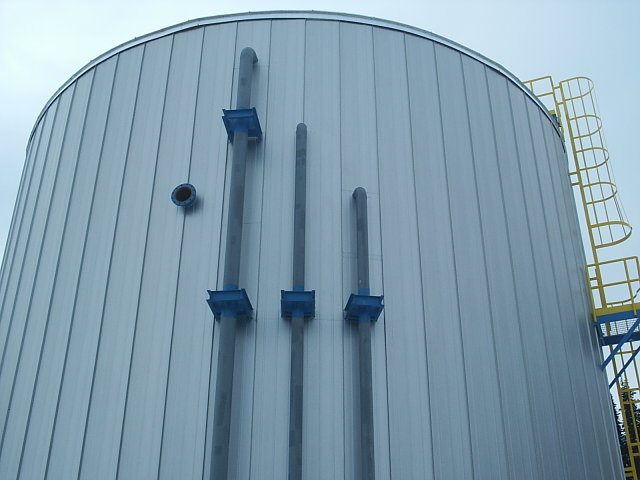
Top Trends for the Storage Tank Industry for 2015

May 26, 2015/in International, Oil & Gas/by Mainland Machinery Ltd

storage tanksTop Trends for the Storage Tank Industry for 2015

The industrial storage tank industry has grown exponentially over the last few years and 2015 is set to be no exception. Here are some of the top trends that will affect the industry this year.

Cleaner, Lighter Fuels

Storing fuel is a major part of the storage tank industry. Cleaner, lighter and alternative fuels are now in greater demand than products such as crude oil, which previously ruled the storage tank industry.

The shift towards more refined fuels has been in large part spurred by increasing government regulation of heavier fuels and more stringent environmental protection legislation. Consumer demand for lighter fuels has also increased and created more of a need for storage solutions.

Now more than ever, there is a greater demand for storage tanks of varying capacities and sizes to fulfill these consumer preferences.

More Flexibility for Storage Needs

The increased demand for cleaner fuels means that there are a greater variety of products in need of storage solutions. As a result, industrial storage tank owners are becoming more flexible with the products they store.

Because the demand for commodities can change rapidly, storage tank owners cannot restrict themselves to specific products. In order to maximize their profits, owners must be able to utilize all of their assets by being flexible with what products they can store.

Increased Investment in Storage Capacity

Recent trends indicate that traders are more interested in investing in storage capacity, with particular attention being paid to independent tank owners. Storage capacity offers a more stable revenue stream than buying directly into more volatile commodity streams, which are typically more susceptible to market fluctuations.

The heightened interest in investing in storage capacity can be attributed to the increasing flexibility that industrial storage tank owners are now utilizing to make their revenue more stable.

Terminal Growth

Despite concerns about hydrocarbon production and consumption, the demand for fossil fuels is increasing. In turn, the demand for industrial storage solutions for these fuels is also on the rise. As a result, storage facilities are becoming larger and more numerous.

The increased demand for storage capacity has been facilitated by several factors. There is an imbalance between global supply and demand for petroleum products. This means that there has been a subsequent increase in demand for storage solutions to help accommodate this disparity.

Furthermore, increasing government regulation of international trade has slowed down the transportation of petroleum products across national borders and as a result, there is a greater need for storage tanks at international ports and crossings.

Growth in Africa

Although there has been an industrial storage tank industry in Africa for several decades, it has seen explosive growth over the past few years. Increasing political stability in many nations, as well as the discovery of sizable hydrocarbon deposits, has meant that the supply of petroleum products to the international market has greatly increased. Booming populations across the continent have also increased demand for these products within Africa.

In turn, there has been a heightened demand for storage solutions. For example, the east coast of Africa, which offers the most direct ocean-based trade routes to Europe and the Americas, saw a number of new storage facilities become operational in 2014.

A Big Year for Industrial Storage

These trends show that 2015 will be a big year for industrial storage tank owners. With many indicators suggesting that the storage tank industry will continue to grow in 2015 and beyond, storage tank manufacturers, as well as those looking to invest in the industry, have much look forward to.


/wp-content/uploads/2021/07/forweba-300x99.png 0 0 Mainland Machinery Ltd /wp-content/uploads/2021/07/forweba-300x99.png Mainland Machinery Ltd2015-05-26 16:16:412015-05-26 16:16:41Top Trends for the Storage Tank Industry for 2015
Mainland Machinery Ltd

Keystone XL Pipeline Myths and Facts

May 19, 2015/in Canada, Oil & Gas, Transportation/by Mainland Machinery Ltd

keystone pipeline, keystone XL7 Myths About Keystone XL, And The Real Story

In the commotion surrounding the Keystone XL pipeline project, from environmental concerns to economic claims, it’s hard to pick out the real story. Here, we address seven rumours, from the frivolous to the serious, to try to uncover the truth.

Myth: Keystone XL Exports Internationally 

This myth is based on pure misinformation, but somehow it is still shared. Oddly, rumours persist that the pipeline would export oil to China, but that’s not in the plans. Keystone XL brings Canadian oil to refineries in the Gulf Coast. These refineries are locked in to long-term contracts to receive oil from Keystone XL, so the reality is that the oil will not be exported internationally.

Myth: Oil Transported by Keystone XL Will Have an Elevated Spillage Risk

This myth stems from the idea that synthetic crude and dilbit, which will be transported by the Keystone XL pipeline need to be heated or are more likely to corrode pipes, leading to spills.

In fact, the pipeline will be built to much higher safety standards than other pipelines. And it’s untrue that the oil would be more corrosive than standard crude—no heating, no major compositional changes.

Myth: Keystone XL Would Increase The Price At The Pump

This myth is mostly a misunderstanding of how oil prices actually work. Gasoline prices are determined by international, not local markets. We saw the result of that when OPEC decided to keep their production levels high and prices plummeted. It’s incredibly rare for one source to determine prices.

That said, Keystone XL has a comparable production capacity to half the current U.S. imports from the Persian Gulf. This stable source of oil could actually lower the price at the pump by making refineries less endangered by global disruptions.

Myth: Exploring the Canadian Oil Sands Will Result in Greater Greenhouse Gas Emissions

In reality, crude oil from the oil sands has very similar well-to-retail pump greenhouse gas emissions to other common sources in the U.S., such as Venezuelan crude. Furthermore, producers aren’t leaving greenhouse gas emissions from the oil sands to chance. Rather, they are actively working to improve the environmental impact of development.

Myth: Stopping Keystone Would Stop Canadian Tar Sands Exploration

This claim is pretty unlikely. The Canadian oil sands production will have a market, whether or not Americans are purchasing from it. It’s much more likely that if Keystone XL wasn’t approved, Canadian producers would just export their oil elsewhere, likely to Asian markets. In that scenario, it’s not like North Americans would stop needing oil, and would likely continue to import from distant Middle Eastern sources. Of course, all of that shipping takes energy, which means it requires oil. From that angle, stopping Keystone could actually increase overall greenhouse gas emissions as all of this oil moves around the world.

Additionally, the government doesn’t predict any change to oil sands production whether the pipeline goes ahead or not.

Myth: Low Oil Prices Have Made Keystone XL Irrelevant

This is far from the truth. Keystone XL pipeline is a part of an infrastructure to help North Americans become more oil self-sufficient, by connecting refineries and sources safely across the continent. With elevated safety measures and fewer shipping costs involved, Keystone XL remains as relevant as ever.

Myth: American Workers Don’t Benefit From the Keystone XL Pipeline

The American Petroleum Institute estimates that Keystone will create as many as 343,000 U.S. jobs in four years. Even conservative estimates from the government forecasts the creation of 42,000 jobs during the construction phase alone. Many of those will be high-wage manufacturing and construction jobs, which help families live comfortably.

In the long term, things look even better. The Canadian Energy Research Institute (CERI) estimates that oil sands activity will increase the total U.S. GDP by $210 billion over the next twenty years. Jobs look good in the long view as well, as CERI predicts 600,000 jobs could be supported by the pipeline in the same period.

/wp-content/uploads/2021/07/forweba-300x99.png 0 0 Mainland Machinery Ltd /wp-content/uploads/2021/07/forweba-300x99.png Mainland Machinery Ltd2015-05-19 14:06:032015-05-19 14:06:03Keystone XL Pipeline Myths and Facts
Mainland Machinery Ltd

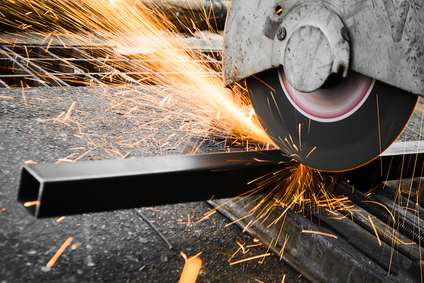
Metal Cutting Methods

May 13, 2015/1 Comment/in Equipment, Metal/by Mainland Machinery Ltd

Metal CuttingChoosing the Best Cutting Method for Your Metal Project

There are many types of metal and each requires different metal cutting techniques. Because of this, there are a variety of methods available to cut metal materials. The method you choose for your project will depend on the type of metal being used, the level of precision that is required and the intended use of the fabricated part and project.

Hand Tools for Cutting Metal Manually

For smaller cutting jobs, hand tools, including hand shears and hacksaws may be used for cutting metal into the desired shape. This cutting method is best suited for projects using more pliable metals, such as thinner-gauge aluminum. Using hand tools to cut metal is not recommended if the metal must be cut into extremely small pieces because the force needed to cut the metal may simply break it, instead of cutting it as intended.

Chisels can also be used to remove excess metal and to make a shape more precise. Depending upon the job, you may opt to use a cold chisel, with a sharpened edge or a hot chisel, which is heated before being hammered through metal.

Using Machinery to Cut Metal

For larger projects or those that use thicker or more robust metals, manual cutting is not always practical. There are numerous machine-based cutting methods to choose from, based on your metal cutting needs.

  • Grinder – For projects that require the finished part to be extremely smooth, a grinding machine may be your tool of choice. Using a rotating blade or wheel made of an abrasive material; a grinder uses friction to wear down the surface of the metal until it is smooth, similar to sanding wood.
  • Lathe – Using a sharpened cutting tool against a rapidly spinning piece of material, a lathe will cut a piece of metal to its desired shape. This machine is very common in the machining industry because it allows for a higher degree of precision.
  • Punch – This machine uses an extreme amount of pressure to force sharpened blades into or through metal to cut it into the shape desired. The amount of pressure generated by a machine punch is far greater than any human worker could produce, thus this cutting method is suitable for metals that are more robust. Some machine punches are capable of up to 1,000 hits per minute, making this cutting method very productive.
  • Water jet – Using water or water mixed with an abrasive compound, this machine directs an intense and concentrated stream into metal and cuts it. This method is best suited for metals that may be sensitive to extreme heat or temperature changes because it does not use heat in the process.
  • Flame and plasma – This process is similar to a water jet, but instead a flammable gas is pumped through a torch to create an intense hot flame. The flame then cuts the metal by burning and melting it. Flame torches, such as oxyacetylene torches are very efficient for cutting. Plasma cutters are known for their high degree of precision because they burn much hotter.

Greater Precision in a New Method of Metal Cutting

Laser cutting is one of the newest and most exciting methods in cutting technology. These cutters apply an intense beam of light to the metal, heating it past its melting point, and then cut through the metal. A laser cutter is able to concentrate light onto a very small area, which makes this method suitable for projects that require a very high degree of precision. However, this method is slower and more expensive than other methods of metal cutting.

/wp-content/uploads/2021/07/forweba-300x99.png 0 0 Mainland Machinery Ltd /wp-content/uploads/2021/07/forweba-300x99.png Mainland Machinery Ltd2015-05-13 10:00:072015-05-13 10:00:07Metal Cutting Methods
Mainland Machinery Ltd

Robotic Mining Equipment: Are We Ready for Automation?

May 7, 2015/in Equipment, HSE, International, Mining, Technology/by Mainland Machinery Ltd

mine operator safetyIs The World Ready For a Fully Automated Mine? 

In the last few years, mining operations have taken advantage of robotic mining equipment to perform some of the more dangerous and repetitive tasks the industry requires. However, despite their high costs, is it possible that a fully automated mine is on the horizon?

There are three reasons why it might be.

Safety

Mining is an inherently dangerous industry. After all, it entails using large machines to drill holes in the Earth, pack them with explosives, and blow them up. Even with the most stringent safety protocols in place, the rate of workplace injuries is higher than most other industries.

However, there are other reasons why safety is compromised in the mining industry. Many of the less dangerous tasks are repetitive and mind numbing, a good example being driving haulage trucks. The job consists of driving from point A to point B and back again. Human drivers are susceptible to boredom and attention drift. That lack of attention is what makes a safe, routine task one where two people are killed every year.

In the mines, robotized mining industry equipment can perform the routine and repetitive tasks, in order to save employees for important tasks.

Efficiency

Robotic mining industry equipment doesn’t need the same kind of breaks that people do. To be sure, they are subject to maintenance, but that can often be done on a predictable schedule, which isn’t true of human labor.

It goes beyond that, of course. Automation allows operations to get closer to the text book optimums for load size and frequency while also allowing for shifts in load sizes due to potential short-term fluctuations.

The use of robotics in scouting for locations offers another opportunity for efficiency. While a manned helicopter could cost as much as $2000 per hour to operate, a drone with a camera costs a mere $500 per hour, meaning drones can cover four times as much territory for the same cost in the same time frame.

Productivity

Robotic mining industry equipment can operate in more dangerous locations, perform repetitive tasks with less loss of efficiency, and aren’t subject to the same workplace laws that humans are. But these are only the most obvious ways they are more productive.

Mining is not an industry that can pick and choose where the job gets done. The job goes where the raw materials are, and if there is a sizeable population of experienced miners, it will be more successful. However, if the area is remote, the operation is faced with either shutting down at times because there are not enough able workers to do the job on a full time basis, or bringing in workers from outside the region. Bringing in workers helps to keep the mine open, but comes at a substantial additional cost.

By performing many of the most repetitive and dangerous tasks, robotic mining industry equipment might actually lower the number of human employees necessary for an operation. Where this is not the case, robotic mining industry equipment will allow organizations to shift their workforce to safer jobs that require a less specific skillset.

In addition, automation would eliminate the need for all workers to be on site, which would allow an organization to place its workforce closer to a population center to eliminate or reduce the need to bring in workers from elsewhere.

A fully automated mining operation is not yet a reality, but with an increasing number of mining tasks being automated every day, it’s only a matter of time before a fully automated operation is possible.


/wp-content/uploads/2021/07/forweba-300x99.png 0 0 Mainland Machinery Ltd /wp-content/uploads/2021/07/forweba-300x99.png Mainland Machinery Ltd2015-05-07 14:30:172015-05-07 14:23:39Robotic Mining Equipment: Are We Ready for Automation?
Page 3 of 16‹12345›»

Categories

  • Agriculture (8)
  • Business Development (14)
  • Canada (24)
  • Charitable (2)
  • Company Update (17)
  • Environmental (5)
  • Equipment (9)
  • Financial (4)
  • Georgia Simmerling (1)
  • Government (10)
  • HSE (18)
  • In the Community (2)
  • Informative (4)
  • International (13)
  • Manufacturing (12)
  • Metal (8)
  • Mining (44)
  • Oil & Gas (49)
  • Ports & Terminals (26)
  • Profiles (1)
  • Services (2)
  • Technology (40)
  • Tips & Tricks (15)
  • Training (9)
  • Transportation (12)
  • Welding (4)
  • Wellness (7)

Contact

Office & Mailing Address:
#110 – 2125 Windsor Street
Abbotsford, B.C.
V2T 6L9

Shipping Address:
#110 – 2138 Carpenter Street
Abbotsford, B.C.
V2T 6B4

Phone: 604-854-4244
Fax: 604-850-1796


Book an Appointment

Newsletter Signup

Keep current with leading edge industry news and Mainland Machinery updates.

SIGN-UP TODAY

Projects

  • Mainland Machinery Announces Distributorship with WAM
  • HELICAL WORKS ANNOUNCES PARTNERSHIP WITH GSI,
  • Dry Flocculant Mixing and Feeding Design Considerations
Copyright © - Mainland Machinery. All Rights Reserved. | Site by Wiebe Industrial Services
  • Link to Facebook Link to Facebook Link to Facebook
  • Link to Instagram Link to Instagram Link to Instagram
  • Link to LinkedIn Link to LinkedIn Link to LinkedIn
  • Link to X Link to X Link to X
Scroll to top Scroll to top Scroll to top